
24/7 Customer Support

Free returns

Same-day & Next-day Delivery

Quality Guaranteed
Download the APP
Categories
For the modern professional, student or digital nomad, a dying laptop battery is more than an inconvenience; it's a barrier to productivity. As our devices, from laptops to tablets, become more powerful, the need for a portable charging solution that can keep up has become essential. A standard USB power bank, once sufficient for a smartphone, no longer meets the demands of a power-hungry workstation.
This is where the 140W power bank comes in. These high-output chargers are designed to deliver mains-level power on the move, ensuring your most critical devices stay operational. This guide is designed to help you understand the key features to look for and to present some carefully selected options that deliver on performance and reliability.
Navigating the technical specifications of a fast charging power bank can be confusing. Here are a few key points to consider to ensure you select a model that fits your needs.
The '140W' figure refers to the maximum power the device can deliver through a single port. This is crucial for charging high-performance laptops, such as a 16-inch MacBook Pro, at their fastest possible speed. To achieve this, look for a PD 3.1 power bank. Power Delivery 3.1 is the latest USB-C charging protocol that enables this high-wattage output, making it a non-negotiable feature for anyone wanting to fast-charge a compatible laptop.
Capacity, measured in milliamp-hours (mAh), determines how much energy the power bank can store. A 25000mAh power bank can typically provide a full charge for most laptops or multiple charges for a smartphone and tablet. However, higher capacity often means greater weight and size. Consider your typical usage: do you need enough power for a full day away from an outlet, or a lighter, more compact unit for short trips? It's also worth noting that power banks up to 27,000mAh (100Wh) are generally permitted in carry-on luggage on flights, but it is always wise to confirm with your airline.
A modern USB C portable charger should offer flexibility. The ideal setup includes at least one high-wattage USB-C port for your laptop and one or two additional ports (USB-C or USB-A) for other devices like your phone, headphones or tablet. This allows you to power your entire mobile setup from a single source, simplifying your travel kit.
Here are our recommendations for high-performance power banks, selected for their specifications and suitability for demanding users.
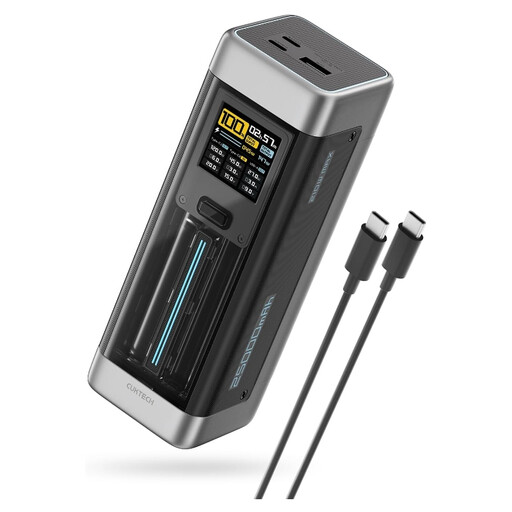
Why It Stands Out: This CUKTECH power bank is built for those who need maximum power and capacity. Its standout feature is the combination of a massive 25,000mAh capacity and a true 140W single-port output, enabled by the PD 3.1 standard. The integrated colour display provides real-time data on power input, output and remaining battery life, giving you complete control and visibility over your charging.
Pros:
Who is it for?: This is an ideal laptop power bank for tech-savvy professionals, content creators and digital nomads who rely on powerful laptops and cannot afford to run out of battery.
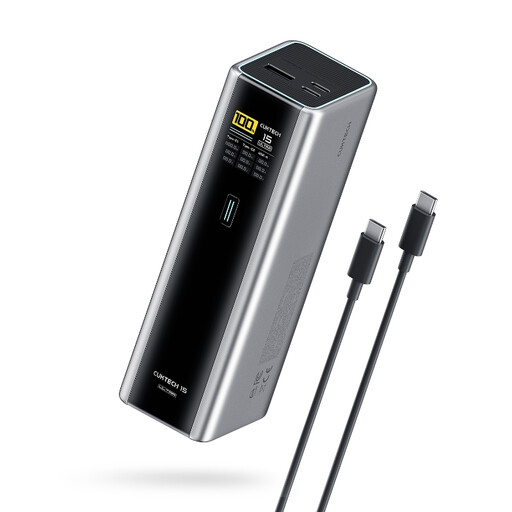
Why It Stands Out: The CUKTECH 15 Ultra offers the same impressive 140W PD 3.1 charging capability as its larger sibling but in a more compact form factor. With a 20,000mAh capacity, it strikes a fine balance between power and portability, making it an excellent companion for daily commutes or business trips where bag space is at a premium.
Pros:
Who is it for?: Frequent travellers and commuters who need a powerful portable laptop charger but prioritise a lighter, more streamlined carry.
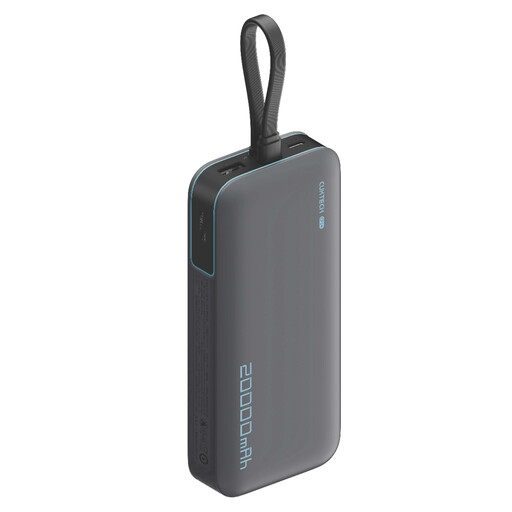
Why It Stands Out: Not every user needs 140W of power. This model provides a substantial 20,000mAh capacity with a respectable 40W output. This is more than enough to charge ultrabooks (like a MacBook Air), tablets and smartphones efficiently. It offers a practical and often more affordable solution for users whose primary devices don't require extreme fast-charging speeds.
Pros:
Who is it for?: Students, office workers and casual users whose devices, such as standard ultrabooks or tablets, do not require more than 40W of charging power.
The world of portable power is vast. If these specific models don't quite match what you're looking for, whether you need a different capacity, size or power level, there are many other solutions available.
Explore our full collection to find the right fit for your devices and lifestyle in our Rechargeable USB category.
Yes, absolutely. High-wattage power banks are equipped with intelligent charging technology. They automatically detect the connected device and deliver only the amount of power it can safely handle. Your smartphone will charge at its own maximum supported speed without any risk of damage.
Generally, yes. The Civil Aviation Authority (CAA) and most airlines restrict batteries in carry-on luggage to 100 Watt-hours (Wh). A 25,000mAh (or 25Ah) power bank with a typical nominal voltage of 3.7V equates to 92.5Wh, which is comfortably within this limit. However, it is always recommended to check the specific policy of your airline before you travel.
PD 3.1, or Power Delivery 3.1, is a USB-C charging standard that enables power transfer up to 240W. If you own a high-performance laptop that supports charging above 100W (like a 16-inch MacBook Pro), a PD 3.1 power bank is necessary to charge it at its maximum rate. For devices that don't require such high power, a power bank with an older PD standard will suffice, but PD 3.1 ensures future-proofing and maximum performance for compatible gear.